Sunday, February 28, 2010

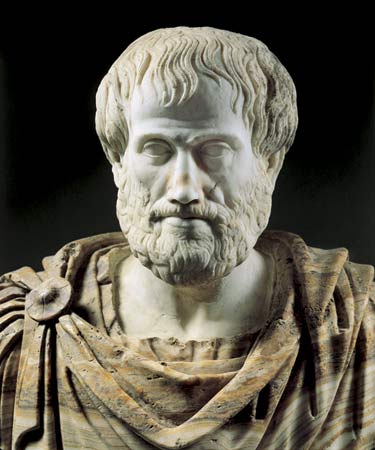
Aristotle


Timeline

384 BC- Aristotle is born
374 BC- His father dies
367 BC- Aristotle enrolls in Academy
347 BC- Aristotle travels to Atarneus and Assos
347/346 BC- Aristotle marries Pythias
335 BC- He travels to Athens and opens the Lyceum
323/3232 BC- Aristotle travels to Chalkis
322 BC- Aristotle died and Theophrastur leads the Lyceum

Biography

Aristotle was born in 384 BC in Chalcidice. Aristotle was also a Greek philosopher and a student of Plato. His writing included subjects like physics, metaphysics, poetry, theatre, music, logic, rhetoric, government, ethics, biology, zoology. He was one of the most important founding figures of the Western philosophy. He died in 322 BC at age 61 or 62 in Euboea.

Plato


Time line

427 BC- Plato was probably born in Athens
407 BC- Plato associated with Socrates mainly because of political reasons
404-403 BC- He became disgusted with politics.
399 BC- Plato believed that politics was to found a school and create a new kind of character
367 BC- Plato makes his second trip to Syracuse
347 BC- Plato dies at age 80. (He was never married and had no children)

Biography

Plato was a classical Greek philosopher, mathematician, writer of philosophical dialogues, and founded the Academy of Athens. He helped the foundations of natural philosophy, science, and Western philosophy. He was once a student of Socrates. He was influenced by his thinking as by what he saw as his unjust death. Plato died in 348-347 BC at age 84.

Socrates


Socrates
470 BC- born, son of a sculptor
431 BC- Peloponnesian War begins
418 BC- Socrates fights in Battle of Mantinea as a armed soldier. He was about 52.The battle was lost.
404 BC- Peloponnesian War ends.
399 BC- Socrates is executed. He was around 70-71 years old.

Biography

Socrates was considered one of the wisest Greek philosophers during the Peloponnesian War. He was most famous for his sayings, his method of discussion or dialogue, and "Socratic irony." he actively participated in Athenian democracy. He served in the Peloponnesian War. His life came to and end when he ingested poison hemlock, in fulfillment of his death sentence.

Philosophy & Socratic Method

Philosophy is the study of general and fundemental problems concerning matters such as existence, knowledge, values, reason, mind, and language. The Socratic Method is really a debat that people have have opposite views based on asking questions to stimulate thinking and bring up ideas.

wikipedia.org

Thursday, February 25, 2010

Today In Class We...

Today In class today we watched the rest of the presentations. Here are the notes that I took while watching them:

Places of Ancient Greece
- Acropolis- means upper city
○ 200ft above the rest of the city
○ Known for its statues
- Agora
○ One of the more important parts of ancient city of Athens
○ Like a marketplace
○ Like a mall
- Propylene
○ Is a gateway that serves as a entrance to the Acropolis
- The Temple of Athena Nike
○ Means victory
- Delphi
○ Considered a place where heaven and earth met
○ Center of warship of Apollo
○ Oracle of Delphi- a spiritual experience when Apollo is asked for advice
○ Tholas- the most recognized building on the site because of the color of the marble and the fact that it is a round temple.
○ Famous for many athletic statues
- Sparta
○ Sanctuary of Atremis Orthia
○ One of the most religious parts of Sparta
○ Had a theatre
- Olympia
○ The Temple of Zeus
○ Built by Libon
○ Olympics were held there on the first Olympics
○ Inside the temples is one of the seven wonders of the world.
○ The Philippeion
○ It contains statues of Philips family
○ Only statue dedicated to a human
○ Temple of Hera
○ The wife of Zeus


Greek Mythology
- Hera
○ Queen of the Olympians
○ She hated Hercules
○ The oldest temples were consecrated to her
- Zeus
○ He was the god of the slide
○ He was the fathers of Hercules and Perseus
○ His father was Cronus
○ He was the youngest sons of the titans
○ He had had affairs with eight goddesses other than his wife
○ Also with many mortals and nymphs
○ Weapon was a thunderbolt
- Greek Heroes
○ Consisted of myths and legends
- Hercules
○ Was known as a hero as an infant
○ He had 12 labors before his death all challenging
- Theseus
○ Second most known hero
○ Mainly because of his ancestors
○ Known to be hero at sixteen
○ He defeated many beasts and humans
- The Griffin
○ Body on a lion and head of an eagle
○ Lion was considered the king of the beasts
○ Eagle was the king of the birds
Wednesday, February 24, 2010

Today In Class We.....

Today in class two groups presented their projects. One group did the Olympis and the other group did Greek theatre. The theatre group put on a play and Mr. Schick was Zues and he dressed up. I was able to take some notes, but not a whole lot. Here they are:


The Olympics
- Held in honor of gods
- Held in Olympia
- Five days of events
- One day: devoted to sacrifices
- Events included
○ Boxing-
- always became more and more brutal
○ Wrestling
○ Equestrian events
- Only the wealth could participate
- The horse who won- not the rider- but the owner would win
- Chariot racing
- Riding
*Pankration
○ Pentathlon
- Wreaths of leaves were awarded to the owners, and competitors, and warn as headbands, as they won their events in the Olympic Games


Greek Theatre
Four types of Greek theatre:
Tragedies
Comedies

Called theatrons- outdoors arenas

Tuesday, February 23, 2010

Today In Class We.....

Today in class we got back together in our groups to work on our projects. Our group is working well together and I hope we get a good grade.